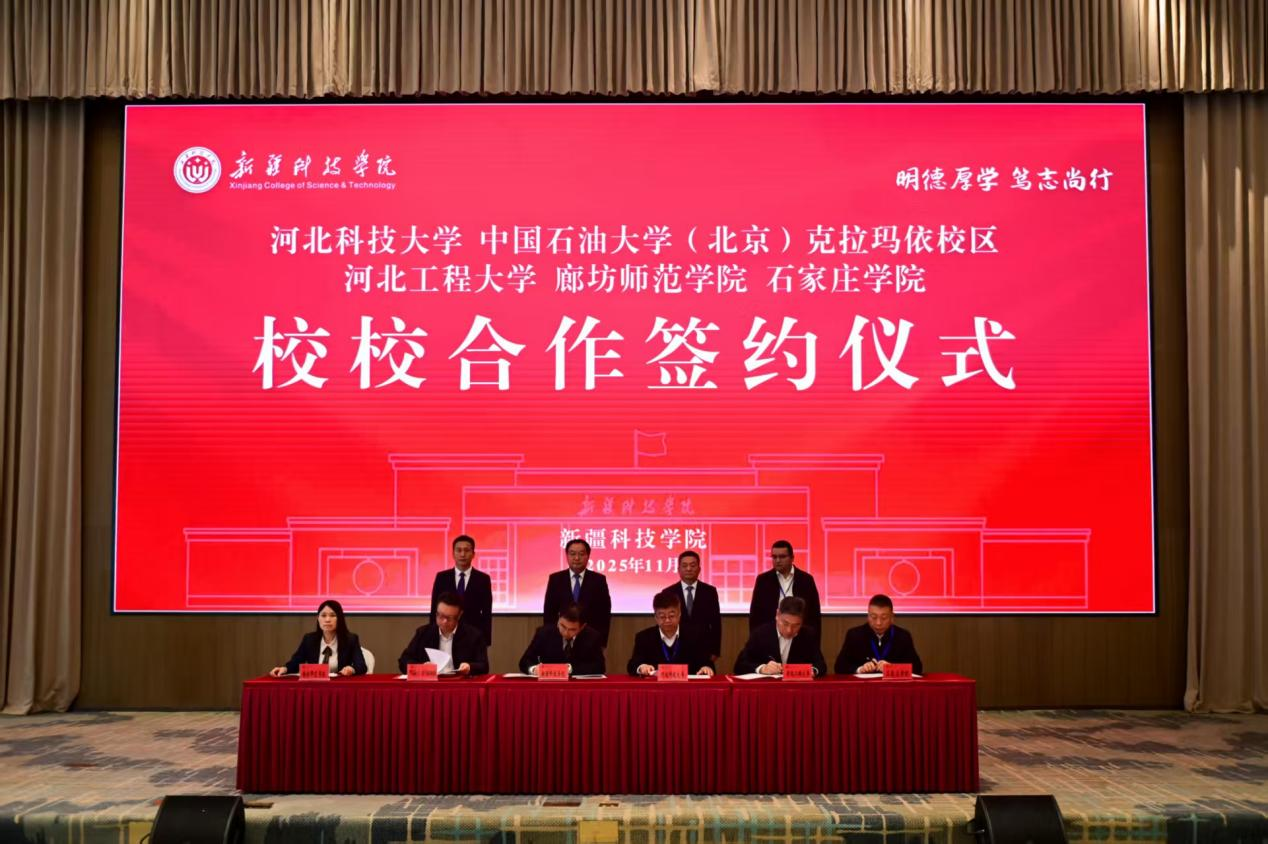
From November 16th to 20th, Li Huilin, Secretary of the Discipline Inspection Commission of our university, led a delegation to Korla, Xinjiang to exchange views on topics such as strategic cooperation between cities and schools, university cooperation and basic education support, visited key educational institutions, and deepened multi-party linkage with pragmatic measures.
On the morning of November 17, Li Huilin and his entourage attended the work conference on counterpart support for Xinjiang Institute of Science and Technology and signed a strategic cooperation agreement with the Institute. The two sides will carry out in-depth cooperation in the fields of discipline construction, teacher exchanges, scientific research and teaching cooperation, jointly promote resource sharing, complementary advantages, and help the development of regional higher education.
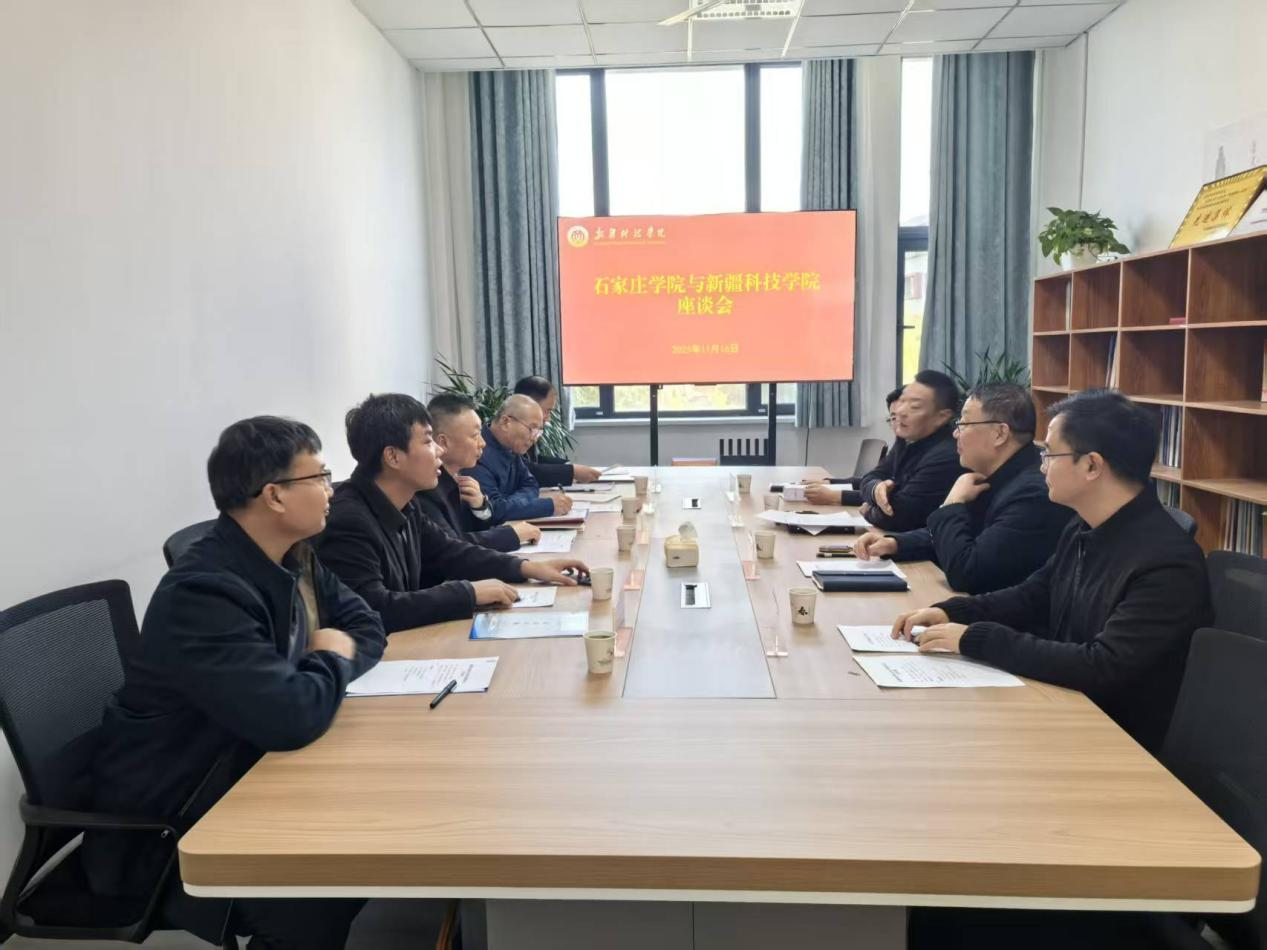
After the signing ceremony, Li Huilin and his entourage had a special discussion with the School of Business Administration of Xinjiang University of Science and Technology. The two sides held in-depth discussions on topics such as education in business education and the cultivation of application-oriented talent. The heads of relevant majors of our university introduced in detail the characteristic practices of the university in the fields of digital economy, modern trade and logistics, and put forward cooperation ideas such as jointly building discipline platforms, jointly developing courses, and sending teachers and students to visit each other.
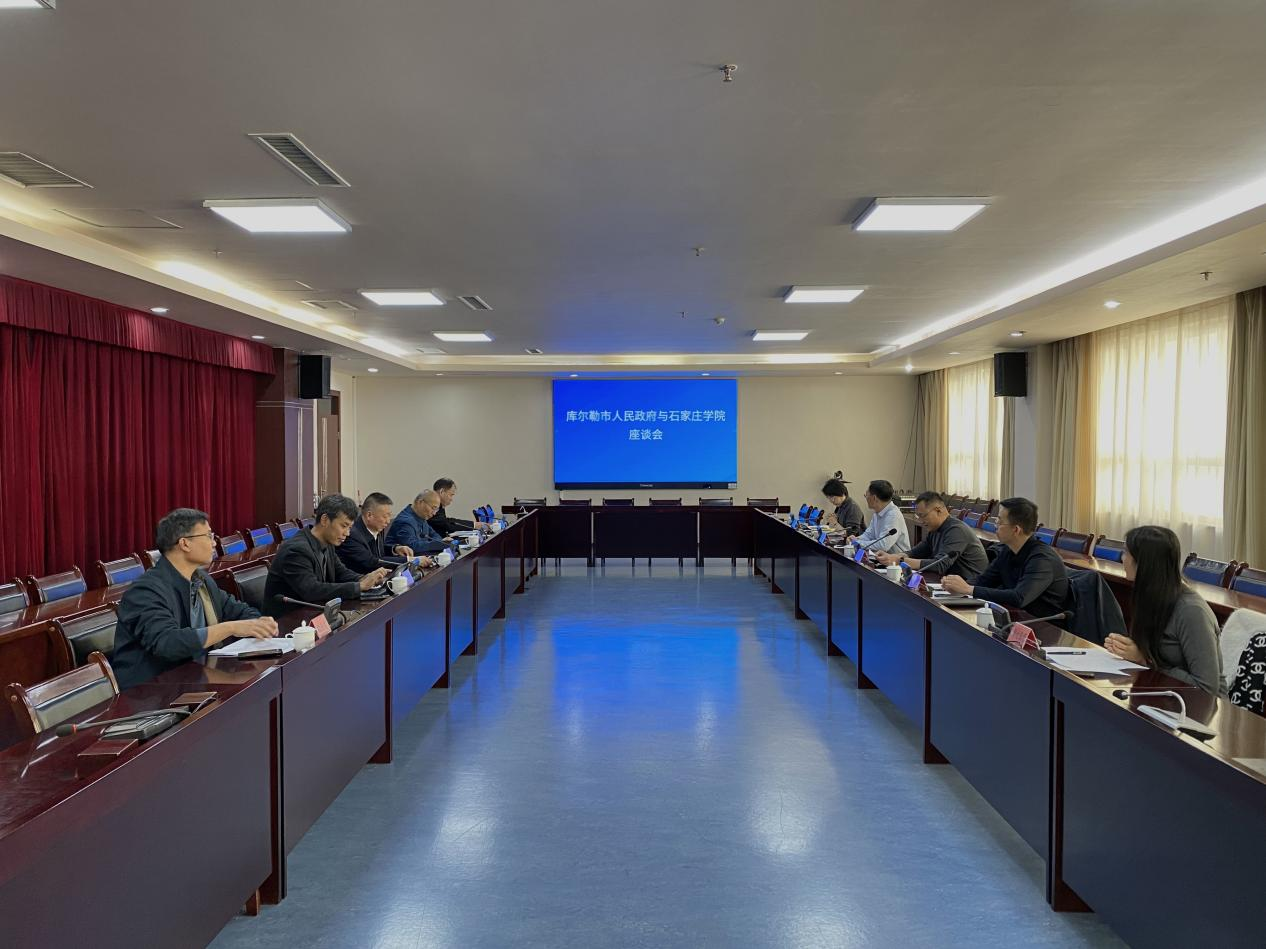
On November 18, Li Huilin and his entourage held a symposium on promoting city-school cooperation with the Korla Municipal People's Government, focusing on the implementation of the "Strategic Cooperation Agreement between Shijiazhuang University and Korla Municipal People's Government", and conducting in-depth exchanges on topics such as Bazhou's special enrollment plan, basic education support, and cultural and tourism cooperation. Zhao Feng, deputy secretary of the Korla Municipal Party Committee and commander of the Shijiazhuang Forward Headquarters for Xinjiang Aid to Xinjiang, and heads of relevant functional departments attended the symposium.
The meeting pointed out that Korla City, as an important node city in the core area of the Silk Road Economic Belt, is accelerating the cultivation of new quality productive forces and promoting industrial upgrading, and urgently needs to obtain high-quality resource support such as education, science and technology, and cultural tourism. As a benchmark university for application-oriented transformation and development in Hebei Province, our university has outstanding advantages in talent training, scientific research and innovation. Since the signing of the "Strategic Cooperation Agreement between Shijiazhuang University and Korla Municipal People's Government" in September, the cooperation between the two sides has been steadily advancing, and the two sides will establish a normalized docking mechanism, focusing on special enrollment, basic education, cultural and tourism integration and science and technology industry cooperation, promote the transformation of ideological consensus into practical results, and achieve resource sharing, complementary advantages and win-win development.
During the meeting, Li Huilin and his entourage visited the Korla Youth Demonstration Comprehensive Practice Base, Korla No. 21 Middle School and Korla No. 2 Middle School, listened to the introduction of the school's "group-style" aid to Xinjiang, visited the alumni of our university, gained an in-depth understanding of the local education development needs, and discussed the path to improve the quality of basic education.

On November 19, Li Huilin and his entourage further exchanged views with Niu Yunfei, deputy commander of the Shijiazhuang Forward Headquarters for Aid to Xinjiang, member of the Standing Committee of the Korla Municipal Party Committee and vice mayor, as well as school leaders of the Korla Municipal Education Bureau and Korla No. 21 Middle School on the details of cooperation such as basic education aid and intern placement, and refined the implementation plan of normal student internships, teacher training and other projects to ensure that the aid to Xinjiang was accurate and effective.
This trip to Korla is an important practice for our university to implement the requirements of counterpart aid to Xinjiang in the new era, and it is also a specific action to deepen the positioning of "local, application-oriented, and international" university and firmly implement the "1396" development strategy. Through university cooperation and local docking, our university has further clarified the direction of cooperation with Korla and related universities and consolidated the foundation of cooperation.
(Contributed by: Scientific Research Office, Personnel Department, Employment Service Center, School of Future Information Technology; Written by: Feng Xiaolong)





 stamp
stamp