From November 20 to 22, a delegation of 16 experts from the Ministry of Education, appointed by the Evaluation Center of the Ministry of Education, conducted an on-site accreditation visit to our university’s four majors: Fine Arts, Physical Education, History, and Music. The delegation was led by Professor Li Dazhi, former Vice President of Hunan Normal University and leader of the Fine Arts major expert panel; Professor Wang Qingjun, former Vice Dean of the School of Physical Education at Nanjing Normal University and leader of the Physical Education major expert panel; Professor Zhou Changshan, former Director of the Academic Affairs Office at Guangxi Normal University and leader of the History major expert panel; and Professor Ding Jinhong, Dean of the School of Education Science at Nantong University and leader of the Music major expert panel.
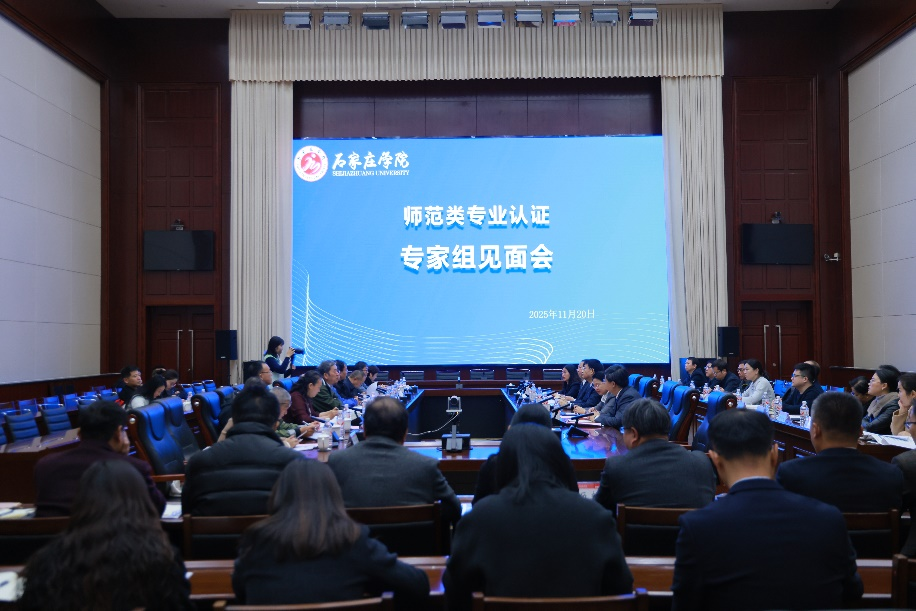
On the morning of the November 20, the expert panel’s meeting was held in the first lecture hall. All members of the joint accreditation expert panel, along with the school’s leaders, administrative departments, representatives from the affiliated colleges, and heads of the accredited majors, attended the meeting. The first phase of the meeting was chaired by Vice President Li Juan, while the second phase was chaired by Professor Li Dazhi, the leader of the joint accreditation expert panel.
On behalf of all faculty and students of our university, Party Secretary Chen Liang extended a warm welcome and sincere gratitude to the expert panel. He stated that teacher education is both a traditional strength and a distinct feature of our university. It has always adhered to its educational mission and commitment to nurturing talent. In recent years, the university has actively responded to the Ministry of Education’s deployment of teacher education program accreditation, focusing on both internal and distinctive development. It has deepened comprehensive reforms in teacher education, strengthened collaboration with local governments and primary and secondary schools, and continuously enhanced the core competitiveness, industry influence, and social contributions of its teacher education majors. These efforts have laid a solid foundation for the accreditation visit of the expert panel.
President Wang Yongqin delivered a comprehensive report on our university’s teacher education majors, which included the following five aspects: building a solid foundation for teacher education based on regional needs; highlighting the university’s commitment to deepening reforms in teacher education with a student-centered approach; strengthening the faculty team to ensure robust support for educational resources; focusing on meeting the fundamental requirements to guarantee the quality of teacher education and persisting in improving the overall level of teacher education.
Professor Li Dazhi, the leader of the joint accreditation expert panel, provided an overview of the on-site accreditation. He emphasized that the accreditation of teacher education majors plays a vital role in bridging higher education with basic education, enhancing the school’s emphasis on teacher education, and promoting innovations in education approaches. In light of the new demands of basic education and the stricter standards of the second round of accreditation, he noted that the school should refine teacher education foundation and develop unique characteristics. The expert panel, he assured, would follow established standards, stick to key issues, focus on courses and adhere to a problem-solving and continuous improvement approach, with the accreditation process being conducted fairly, justly, and in an orderly manner.
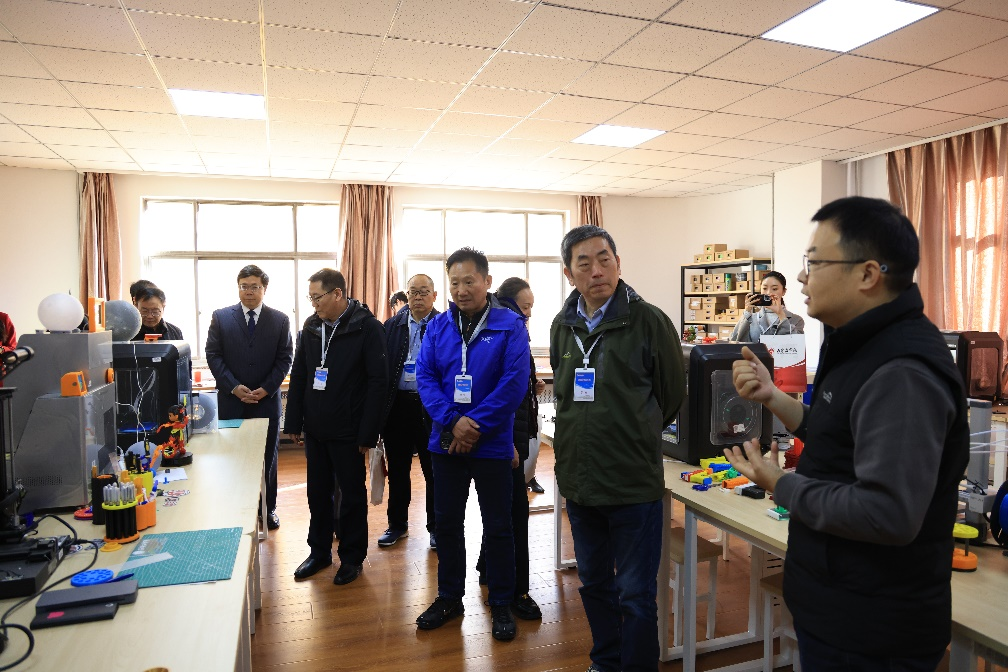
Following this, the expert panel conducted evidence-based inquiries with the relevant administrative departments. Then, a major-based meeting was held with the colleges with the accredited majors. In accordance with the evaluation schedule and the certification standards, the panel employed multiple methods—including document reviews, class observations, in-depth interviews, meetings with faculty and students, site visits, and group deliberations—to evaluate the actual outcomes of the teacher education majors.
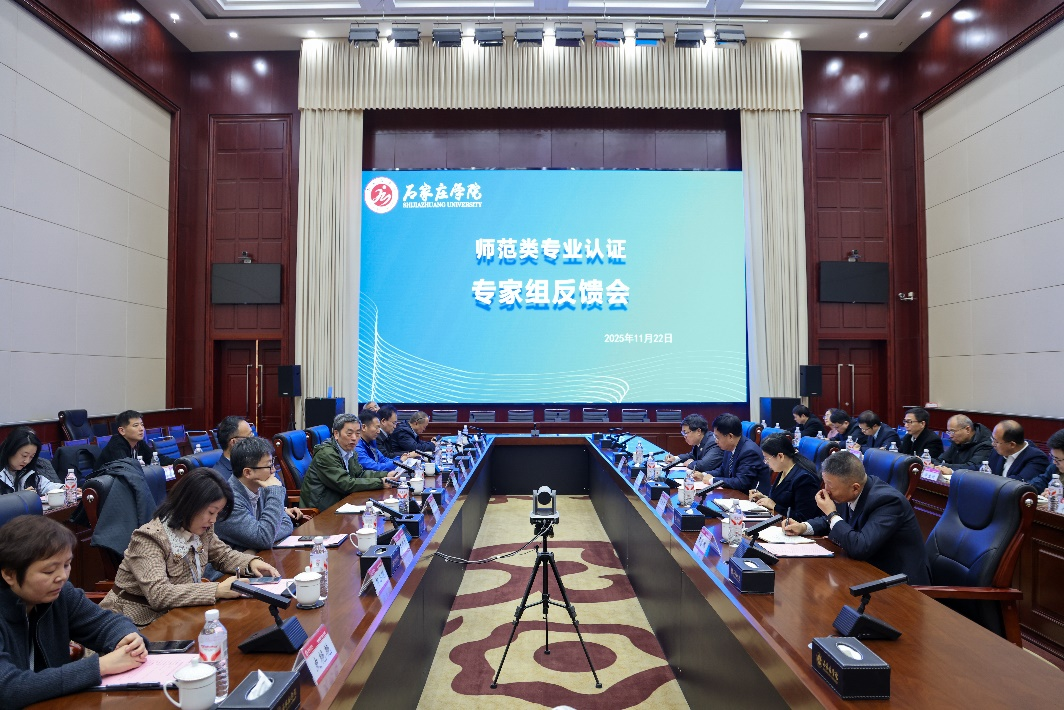
On the morning of the November 22, the expert feedback meeting was held in the first lecture hall. Panel leader Professor Li Dazhi and the leaders of each specialized expert panel, focusing on the accreditation philosophy and adhering to both the “mainline” and “bottom line” of the accreditation standard, provided feedback based on the accreditation standards for the on-site evaluation. The expert panel unanimously affirmed that the university leadership has placed a high priority on teacher education, with sound management systems and comprehensive procedural documentation in place. Notable achievements have been made in fostering professional ethics and enhancing the educational competencies of teacher candidates. Meanwhile, the panel also pointed out areas for further improvement, including the facilities for teaching skills training, alignment with basic education needs, and the coherence between accreditation requirements and curriculum objectives.
Chen Liang expressed heartfelt gratitude to the expert panel for their hard work and the careful guidance they provided over the past few days. He also made a statement on behalf of our university. He emphasized that the feedback from the expert panel not only fully acknowledged the progress made in the school’s major development but also helped identify areas of weakness, pointing out the directions for future improvement. He stated that the university would adopt a “self-reflective approach” to anchor its improvement goals, sincerely accepting and fully incorporating the panel’s feedback. Through continuous benchmarking and enhancement, the university will ensure that the evaluation process promotes development, drives reform, and fosters excellence. Based on “educational confidence”, we will consolidate our institutional foundation, develop the distinctive features of our teacher education major clusters, and achieve a leap in the core competitiveness of teacher education. Guided by “strategic awareness” to drive reform and innovation, we will strengthen the foundation of teacher education and enhance the integration with the basic education system of Shijiazhuang, dedicating to delivering higher education that meets people’s expectations.
(Contributor: The Academic Affairs Office ; Editor: Li Lin)
From November 20 to 22, a delegation of 16 experts from the Ministry of Education, appointed by the Evaluation Center of the Ministry of Education, conducted an on-site accreditation visit to our university’s four majors: Fine Arts, Physical Education, History, and Music. The delegation was led by Professor Li Dazhi, former Vice President of Hunan Normal University and leader of the Fine Arts major expert panel; Professor Wang Qingjun, former Vice Dean of the School of Physical Education at Nanjing Normal University and leader of the Physical Education major expert panel; Professor Zhou Changshan, former Director of the Academic Affairs Office at Guangxi Normal University and leader of the History major expert panel; and Professor Ding Jinhong, Dean of the School of Education Science at Nantong University and leader of the Music major expert panel.
On the morning of the November 20, the expert panel’s meeting was held in the first lecture hall. All members of the joint accreditation expert panel, along with the school’s leaders, administrative departments, representatives from the affiliated colleges, and heads of the accredited majors, attended the meeting. The first phase of the meeting was chaired by Vice President Li Juan, while the second phase was chaired by Professor Li Dazhi, the leader of the joint accreditation expert panel.
On behalf of all faculty and students of our university, Party Secretary Chen Liang extended a warm welcome and sincere gratitude to the expert panel. He stated that teacher education is both a traditional strength and a distinct feature of our university. It has always adhered to its educational mission and commitment to nurturing talent. In recent years, the university has actively responded to the Ministry of Education’s deployment of teacher education program accreditation, focusing on both internal and distinctive development. It has deepened comprehensive reforms in teacher education, strengthened collaboration with local governments and primary and secondary schools, and continuously enhanced the core competitiveness, industry influence, and social contributions of its teacher education majors. These efforts have laid a solid foundation for the accreditation visit of the expert panel.
President Wang Yongqin delivered a comprehensive report on our university’s teacher education majors, which included the following five aspects: building a solid foundation for teacher education based on regional needs; highlighting the university’s commitment to deepening reforms in teacher education with a student-centered approach; strengthening the faculty team to ensure robust support for educational resources; focusing on meeting the fundamental requirements to guarantee the quality of teacher education and persisting in improving the overall level of teacher education.
Professor Li Dazhi, the leader of the joint accreditation expert panel, provided an overview of the on-site accreditation. He emphasized that the accreditation of teacher education majors plays a vital role in bridging higher education with basic education, enhancing the school’s emphasis on teacher education, and promoting innovations in education approaches. In light of the new demands of basic education and the stricter standards of the second round of accreditation, he noted that the school should refine teacher education foundation and develop unique characteristics. The expert panel, he assured, would follow established standards, stick to key issues, focus on courses and adhere to a problem-solving and continuous improvement approach, with the accreditation process being conducted fairly, justly, and in an orderly manner.
Following this, the expert panel conducted evidence-based inquiries with the relevant administrative departments. Then, a major-based meeting was held with the colleges with the accredited majors. In accordance with the evaluation schedule and the certification standards, the panel employed multiple methods—including document reviews, class observations, in-depth interviews, meetings with faculty and students, site visits, and group deliberations—to evaluate the actual outcomes of the teacher education majors.
On the morning of the November 22, the expert feedback meeting was held in the first lecture hall. Panel leader Professor Li Dazhi and the leaders of each specialized expert panel, focusing on the accreditation philosophy and adhering to both the “mainline” and “bottom line” of the accreditation standard, provided feedback based on the accreditation standards for the on-site evaluation. The expert panel unanimously affirmed that the university leadership has placed a high priority on teacher education, with sound management systems and comprehensive procedural documentation in place. Notable achievements have been made in fostering professional ethics and enhancing the educational competencies of teacher candidates. Meanwhile, the panel also pointed out areas for further improvement, including the facilities for teaching skills training, alignment with basic education needs, and the coherence between accreditation requirements and curriculum objectives.
Chen Liang expressed heartfelt gratitude to the expert panel for their hard work and the careful guidance they provided over the past few days. He also made a statement on behalf of our university. He emphasized that the feedback from the expert panel not only fully acknowledged the progress made in the school’s major development but also helped identify areas of weakness, pointing out the directions for future improvement. He stated that the university would adopt a “self-reflective approach” to anchor its improvement goals, sincerely accepting and fully incorporating the panel’s feedback. Through continuous benchmarking and enhancement, the university will ensure that the evaluation process promotes development, drives reform, and fosters excellence. Based on “educational confidence”, we will consolidate our institutional foundation, develop the distinctive features of our teacher education major clusters, and achieve a leap in the core competitiveness of teacher education. Guided by “strategic awareness” to drive reform and innovation, we will strengthen the foundation of teacher education and enhance the integration with the basic education system of Shijiazhuang, dedicating to delivering higher education that meets people’s expectations.
(Contributor: The Academic Affairs Office ; Editor: Li Lin)
Address: No. 288, Zhufeng street, Shijiazhuang high tech Development Zone
Post code: 050035 administrator mailbox: admin@sjzc.edu.cn
Filing No.: Ji ICP Bei 05002868-1 Ji Gong Wang an Bei 13019902000108



 stamp
stamp